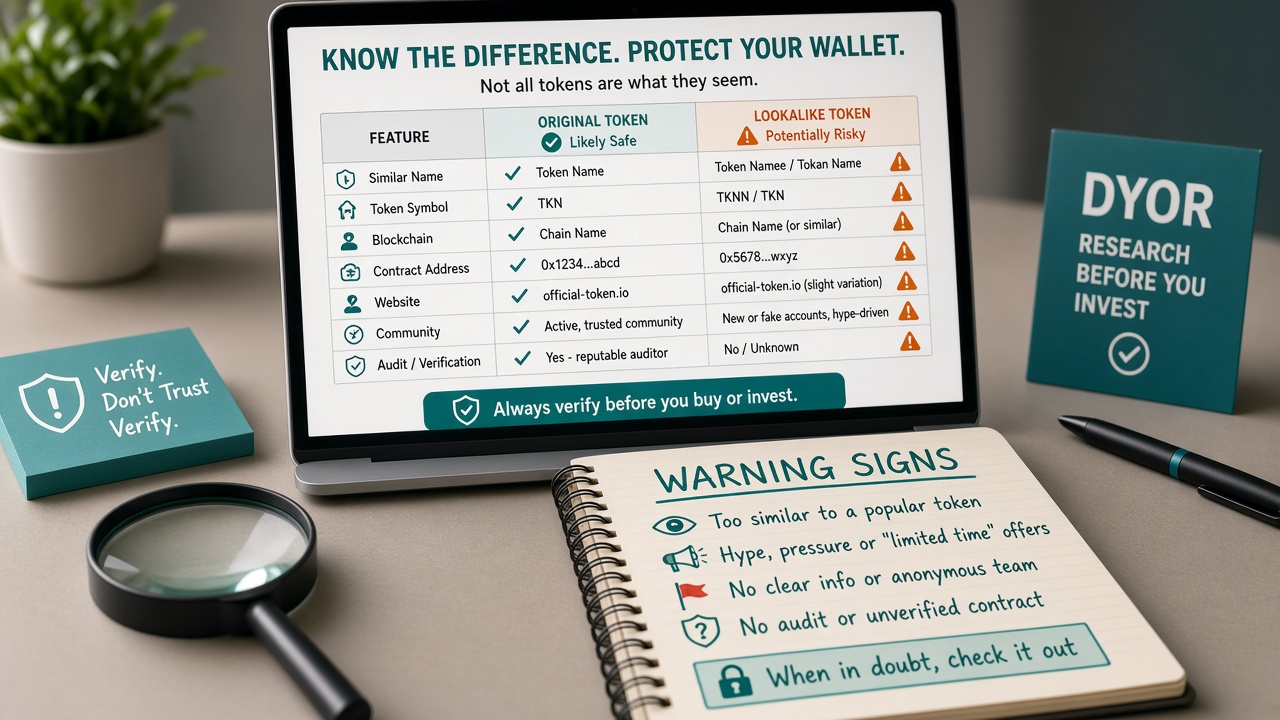
Verifying information before clicking a link or approving a wallet action is one of the most effective habits for avoiding crypto phishing and scams. Attackers depend on users acting quickly without checking whether a message, website, or token is genuine. Slowing down to verify can prevent most credential theft and unauthorised transactions.
This page is general educational information only. It is not financial advice, investment advice, or a recommendation of any wallet, exchange, or platform.
Why Verification Matters
Crypto transactions are typically irreversible once confirmed on the blockchain. Unlike traditional banking, there is no central authority that can reverse a transfer or restore stolen credentials. This makes prevention through verification far more important than attempting recovery after an incident.
Scammers design their messages and websites to discourage verification. Urgency, exclusivity, and fear are common emotional triggers intended to bypass careful checking. Recognising these pressure tactics is itself a form of verification.
Checking URLs and Domain Names
Before entering credentials or connecting a wallet to any website, verify the URL matches the official domain exactly. Look for HTTPS encryption, but remember that HTTPS alone does not prove a site is legitimate since scammers can obtain certificates for fake domains.
Compare the URL character by character against a bookmark or official documentation. Watch for homoglyphs, characters that look similar but are different, and extra words inserted into the domain name.
Verifying Token and Contract Information
Before interacting with any token, verify its contract address through the official project's website or verified announcements. Do not rely on the token name or symbol shown in a wallet interface or on a third-party listing site.
If someone shares a token address through a message or social media post, treat it as unverified until you confirm it independently through an official source. Addresses shared in unsolicited messages are particularly suspect.
Confirming Support and Communication
If you receive a support message about your wallet or account, do not respond through the channel provided in the message. Instead, navigate to the official website independently and use the documented support process.
Legitimate organisations do not ask for seed phrases or private keys through any communication channel. Any message requesting these credentials fails verification immediately and should be reported as a scam.
Reviewing Transaction Details Before Approval
When your wallet prompts you to approve a transaction, read every detail displayed. Check the recipient address, the amount, the network, and any permissions being granted to a smart contract. Malicious transactions may appear alongside legitimate ones in busy wallet interfaces.
If anything looks unfamiliar or unexpected, reject the transaction and investigate separately. Do not approve transactions under time pressure from a website claiming limited availability or urgent deadlines.
Cross-Referencing Through Independent Sources
Use multiple independent sources to verify important information. If a project announces a token address on its official website, confirm the same address appears on its verified social media account. Consistency across official channels increases confidence in the information.
Avoid relying on search engine results alone, as scammers can purchase advertisements that appear above legitimate results for popular crypto search terms.
Creating a Personal Verification Routine
A simple routine can help make verification habitual. Before any significant wallet action, pause and ask: Is the source official? Have I confirmed the address or URL independently? Am I being pressured to act quickly? Does this request involve sharing credentials?
If any answer raises concern, stop and seek confirmation through a trusted official channel before proceeding.
Verification as a Core Security Skill
In the crypto environment, the ability to verify information before clicking is as important as protecting seed phrases or using strong device security. Most successful scams are prevented not by advanced technology but by a user who took a moment to check.
Building this habit reduces exposure to phishing, fake tokens, and fraudulent support across every area of wallet use.