Welcome. You are in the DigiEduAu phishing guide, with educational articles about fake websites, recovery scams, lookalike tokens, and suspicious links. We do not sell services or promote specific platforms. Wallet basics readers can return to the homepage from the menu.
DigiEduAu is a non-commercial educational blog focused on helping people understand phishing risks, fake coins, and social engineering around crypto wallets. Our goal is to explain warning signs in accessible language without offering individual security consulting, investment advice, or recommendations for particular products or platforms. We are not affiliated with any token issuer, exchange, wallet vendor, or recovery service. Readers can use our articles to build a clearer understanding of how impersonation scams are commonly described. The phrase fake coin education appears frequently in public discussions, but the important point is to distinguish general educational information from advice about an individual situation. Our content is designed for learning and safer verification habits rather than commercial recommendations.
Our readers include people who receive unexpected crypto-related emails, chats, or notifications and want plain-language ways to review them. They may be asking why a message creates urgency, why a domain looks almost familiar, or why support would never need a seed phrase. The blog explains concepts without assuming specialist knowledge.
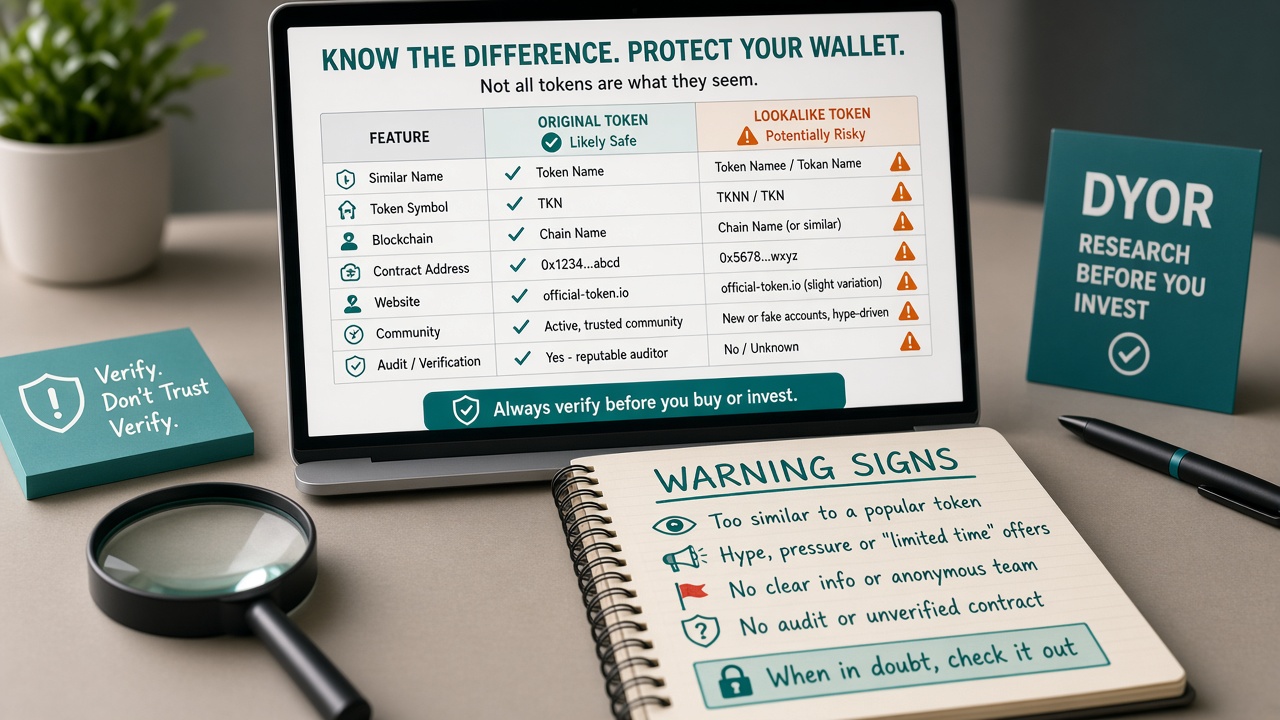
Some readers want to understand how lookalike tokens and promotional scams are described online. They may have seen unfamiliar ticker symbols, airdrop claims, or copycat project pages. Our educational material explains verification questions people can ask, without ranking investments or recommending any token.
Another group consists of people who simply want neutral background before making assumptions. They may compare official project channels with third-party posts, or explore how recovery scams operate. We provide educational context only. The blog does not determine a reader's individual risk and does not recommend platforms, advisers, or investment products.
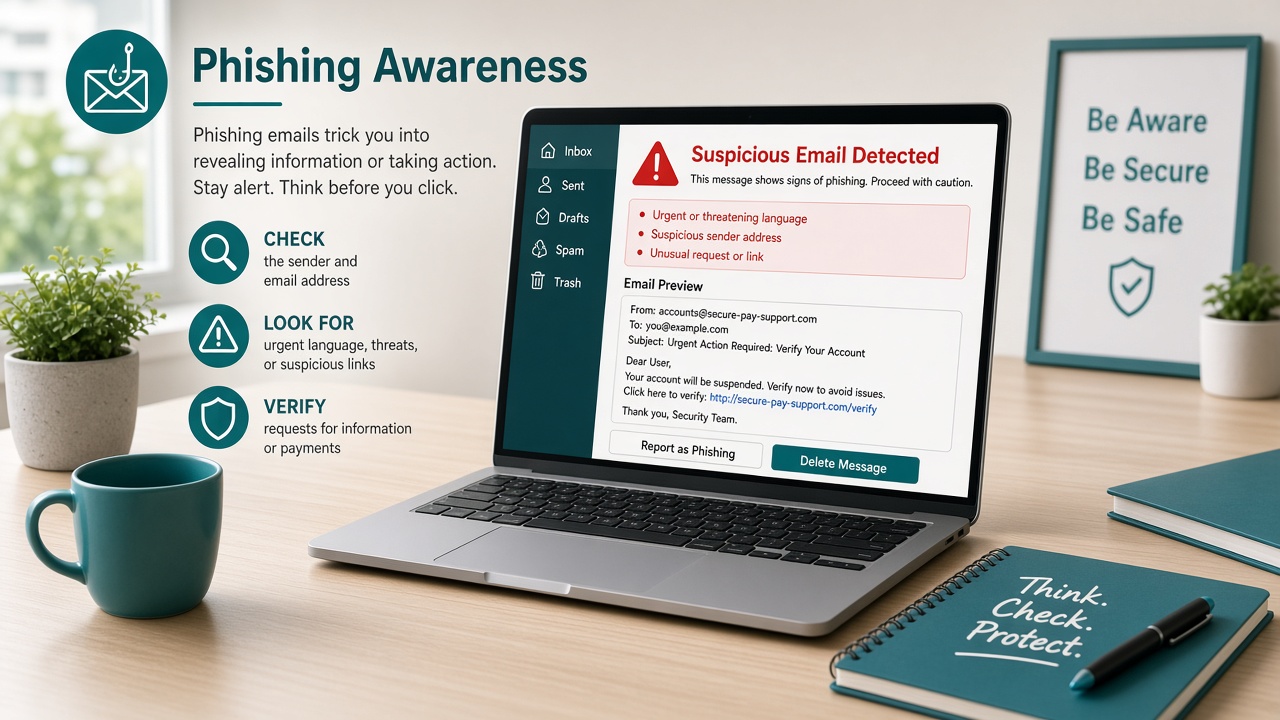
A suspicious crypto message should be read as a set of claims that need verification rather than as an urgent instruction. When reviewing a message, first check the channel: email, chat app, SMS, browser pop-up, or social media reply. Educational guidance often notes that attackers reuse branding and create time pressure.
Next, identify what the message asks you to do. Requests to reveal a seed phrase, install an unknown app, approve an unclear transaction, or visit a newly shared link deserve extra caution. A transfer between your own wallets is different from interacting with an unfamiliar website.
Pay particular attention to domain spelling, unexpected attachments, and claims of locked accounts or guaranteed rewards. Independent education emphasises that unsolicited giveaways and “support agents” who contact you first are common social engineering patterns.
Finally, compare the message with information from a known official channel you already trust, without treating this page as an official source for any project. If something is missing, duplicated, or inconsistent, pause before acting.
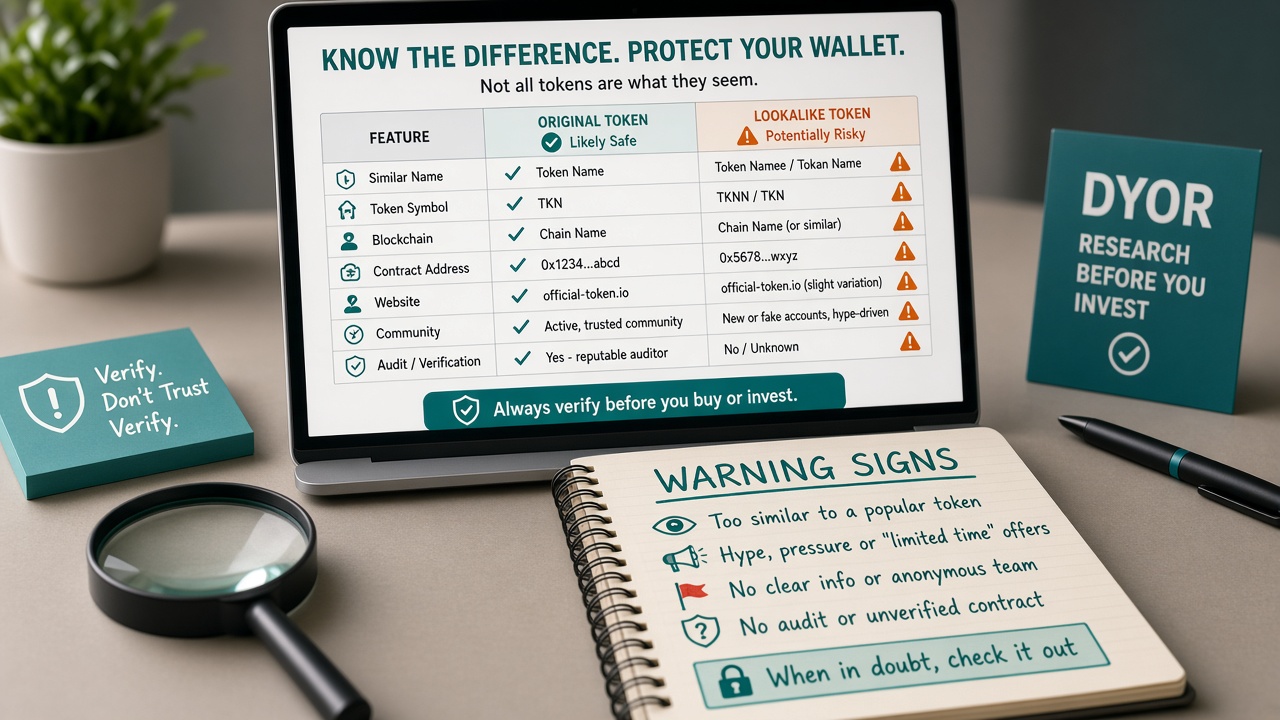
Fake coins and lookalike tokens are often presented with familiar names, logos, or tickers. For people researching scam awareness, understanding common presentation tricks can make verification questions clearer. This subject is educational and does not rank or recommend any token.
Fake support accounts often appear after a person asks for help online. Understanding how recovery scams request seed phrases or remote access can help readers recognise high-risk patterns. DigiEduAu is independent and does not provide recovery services.
Links and apps can imitate trusted wallet names. Understanding how lookalike downloads and shortened URLs appear is useful for educational awareness. When exploring these topics, it is important to avoid treating any article as a product recommendation.
Verification habits help readers slow down before interacting with unfamiliar prompts. These approaches differ from investment analysis and do not involve forecasts or tips. Understanding verification questions is part of independent security education.
Phishing and fake coin risks can appear under several names, including impersonation, airdrop lures, lookalike domains, and social engineering. Understanding how they are presented is useful when studying scam awareness.
Start by identifying exactly what a prompt represents. A marketing page may describe a project, while a phishing page may ask for credentials or seed phrase entry. These situations should not automatically be treated as identical simply because both mention crypto.
For educational purposes, compare the source, the domain, the request, and whether the message creates artificial urgency. Independent education emphasises pausing before approving transactions or downloading software from unexpected links.
The question of whether a promotion is trustworthy should therefore be considered alongside verification steps rather than branding alone. Familiar imagery does not independently prove legitimacy.
This approach allows readers to understand warning signs without endorsing a particular exchange, wallet, software product, or service. The purpose is simply to make high-risk prompts easier to question.
Level 10, 530 Collins Street, Melbourne VIC 3000, Australia